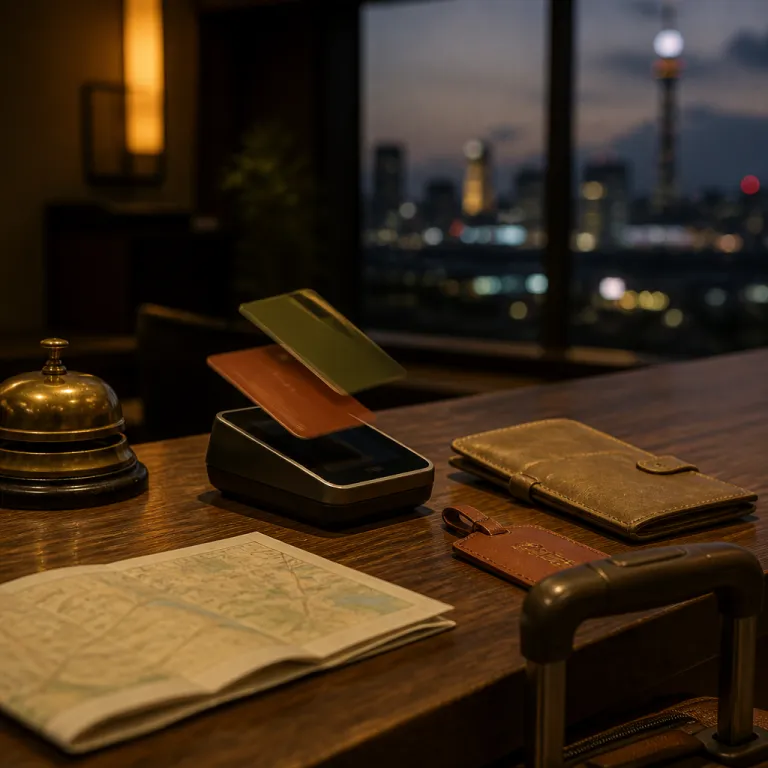
Understanding the Osaka Suica ICOCA card difference for hotel based stays
For travellers basing themselves in Osaka, the practical difference between Suica and ICOCA mainly affects how smoothly you move between your hotel, stations, and major sights. Once you understand how each prepaid IC card works across Japan, you can step off the train at your chosen station and tap straight through the gates without hunting for a paper ticket. This matters even more when you arrive at Kansai International Airport after a long flight and want the best, simplest route to your hotel rather than queuing at ticket machines.
Both the Suica card and the ICOCA card are rechargeable IC cards used on most trains, subways, and buses across Japan, and they also work for small purchases in convenience stores and some vending machines. According to operator figures available as of 2024, Suica cards issued by JR East have reached tens of millions of cards in circulation, while ICOCA cards issued by JR West number in the tens of millions as well, which reflects how deeply these cards are woven into everyday Japan travel. The core distinction for Osaka visitors is not where you can ride, because interoperability means Suica is usable in Osaka and ICOCA is usable in Tokyo, but rather who issues the card, where it is easiest to buy and recharge it, and how refunds and deposits are handled.
When you stay in Osaka or in the Osaka–Kyoto corridor, the ICOCA card is usually the most practical choice because it is issued by JR West, the company that runs many Kansai area trains. You can buy ICOCA at Kansai International Airport, at major JR station ticket machines, and at staffed counters, then use the same card to reach Kyoto, Nara, or Kobe without changing your payment method. Suica cards, issued by JR East in Tokyo, work almost identically in Kansai, so for hotel guests the real difference is about where you start your trip, which operator you find more convenient, and how easily you can get a deposit refund at the end of your stay.
Where to buy and top up Suica and ICOCA around Kansai International and Osaka stations
Landing at Kansai International, most hotel guests want to buy a transport card before boarding the train into the city. At the airport you will see JR West counters and multilingual ticket machines near the JR ticket office where you can buy ICOCA, recharge an existing ICOCA card, or pick up combined offers that bundle rail tickets with the card. A typical new ICOCA purchase includes a 500 yen refundable deposit plus an initial stored value amount such as 1,500 yen, and this is usually the best moment to set yourself up for seamless Japan travel because you can ask staff to load enough credit to cover your first days between airport, hotel, and central Osaka station areas.
If you already hold a Suica card from a previous Tokyo stay, you can still tap through the gates in Osaka, Kyoto, and other Kansai cities without buying a new prepaid card. In this case the functional difference between the two cards is minimal, since both work on the same trains and buses and both can be recharged at compatible ticket machines and convenience stores. Many visitors who split their time between Tokyo and the Osaka–Kyoto region simply keep both cards in their wallet, using whichever one they first bought and topping up at vending machines or station counters whenever the balance runs low.
For travellers starting in Osaka, buying ICOCA at a JR West station such as Osaka, Shin-Osaka, or Tennoji is straightforward and fast. Look for blue ticket machines marked for IC cards near the central ticket gates, choose English on the screen, and follow the guide to buy ICOCA or add value to existing ICOCA cards with cash or a bank card. If you later continue to Tokyo, that same Suica–ICOCA interoperability means your Kansai-issued card will still work on JR East trains, so you avoid juggling multiple tickets while moving between hotels in different regions of Japan.
Using Suica and ICOCA from your hotel: trains, stations, and everyday payments
Once you have checked into your Osaka hotel, the contrast between the two IC cards becomes most visible in how you move between neighbourhoods and pay for small daily purchases, rather than in where you can ride. With either card you simply tap in and out at station gates on JR lines, private railways, and subways, which makes spontaneous travel to Kyoto, Nara, or Kobe as easy as walking to the platform. This tap-and-go system is especially valuable when you are catching early morning trains from Osaka Station to Kyoto for sightseeing and want to avoid queues at ticket machines with other tourists.
Beyond trains, both Suica cards and ICOCA cards function as stored value payment tools in many convenience stores, station kiosks, and vending machines across Japan. You can buy drinks, snacks, or a quick breakfast near your hotel lobby by tapping your card, which keeps your physical wallet light and reduces the need to handle cash. For hotel guests who are new to Japan travel, this dual role as both ticket and prepaid card means fewer separate payments to track and a smoother daily routine between your room, the station, and major attractions.
In practical terms, there is almost no difference when you use the cards for local transport or small purchases. Both the Suica card and the ICOCA card can be recharged at ticket machines, and both work on most trains and buses in the Kansai region and beyond. The main distinction is that ICOCA is more closely associated with Kansai and Osaka–Kyoto routes, while Suica is more closely associated with Tokyo, yet interoperability ensures that hotel guests can rely on either card throughout much of Japan.
Digital ICOCA, Apple Wallet, and Apple Pay for hotel based travellers
Many international visitors now ask whether they can skip the physical card and rely on their phone while staying in Osaka hotels. A growing number of travellers use digital ICOCA or mobile Suica card options on compatible smartphones, which allows them to tap gates and vending machines with Apple Pay or similar services. This can be especially convenient when you leave your physical wallet in the hotel safe and head out with only your phone for an evening in Namba or Umeda.
On supported iPhone models with Apple Pay and recent iOS versions, you can add a Suica card or some forms of ICOCA-style IC cards directly into Apple Wallet, then recharge them with a foreign credit card without visiting ticket machines. For guests who move frequently between Tokyo and Osaka, keeping both a digital Suica and a digital ICOCA in Apple Wallet can simplify Japan travel, because you can switch between cards in the app while using the same device at every station gate. However, availability of full digital ICOCA features may vary by region, device, and account settings, and some Android phones or older iPhones may not support all functions, so hotel concierges often recommend checking the latest guidance from JR East and JR West before relying solely on your phone.
Even if you adopt a digital ICOCA or mobile Suica solution, carrying at least one physical prepaid card remains wise as a backup. Some older ticket machines or regional buses may not fully support every mobile wallet configuration, and a simple plastic card ensures you can still tap in and out if your phone battery fails. For hotel guests who value redundancy, the best approach is to buy ICOCA as a physical card at Kansai International, then add a Suica or ICOCA equivalent into Apple Wallet for day-to-day convenience around Osaka and Kyoto.
Planning Japan travel from your Osaka hotel: routes, costs, and risk management
When you plan Japan travel from an Osaka base, the choice between Suica and ICOCA intersects with route choices, budget, and even risk management. Using either card on trains between Osaka and Kyoto, or on local lines to Universal Studios Japan, usually costs the same as paying with paper tickets, but you save time and reduce the chance of buying the wrong fare. That time saving is particularly valuable if you are catching a Shinkansen from Shin-Osaka Station to Tokyo and want to focus on platform information rather than ticket machines.
From a budgeting perspective, both Suica cards and ICOCA cards act as prepaid wallets, so you can load a set amount and track your daily transport spending while staying at your hotel. Some travellers pair their card strategy with travel insurance, ensuring that if they lose a wallet containing multiple cards, they have coverage for lost items and can quickly replace their main payment tools. While travel insurance will not usually refund the small balance on a single prepaid card, it can protect the higher value bank cards that you might otherwise use at ticket machines or convenience stores.
For multi-city itineraries that include Tokyo, Osaka, and Kyoto, the most efficient pattern is often to start with a Suica card if you first arrive at a Tokyo international airport, then buy ICOCA when you reach Kansai International or a major JR West station. You can then use both cards interchangeably on most trains, buses, and in many shops, which spreads risk if one card is lost or demagnetised. A typical example is flying into Kansai, taking the JR train from the airport to your Osaka hotel with ICOCA, using the same card for a Kyoto day trip, then later riding the Shinkansen to Tokyo and switching to Suica for local travel around Shinjuku or Shibuya.
Choosing the best card setup for different Osaka hotel scenarios
For a short Osaka city break focused on shopping and dining near your hotel, the difference between the two IC cards is almost invisible, so either card will serve you well. In this scenario the best choice is usually to buy ICOCA at the nearest JR West station or at Kansai International, then use it for all trains, subways, and convenience store purchases. Keeping the card in an easily accessible part of your wallet or phone case helps you move quickly through busy station gates at peak times.
If your itinerary combines Osaka–Kyoto day trips with a later move to Tokyo, a mixed setup using both ICOCA cards and Suica cards can be helpful. You might buy ICOCA for the Kansai leg of your journey, then add a Suica card into Apple Wallet once you reach Tokyo, using Apple Pay to recharge without visiting ticket machines. This dual card approach means you always have at least one working prepaid card ready, even if a vending machine or gate temporarily rejects one of them due to local system quirks.
For long stays or frequent business travel, consider keeping a primary ICOCA card as your main Kansai tool and a secondary Suica or PASMO-style card for Tokyo and surrounding regions. Store both cards safely in your wallet, note their ID numbers for reference, and ask your hotel front desk for a printed guide to nearby stations and lines. By treating the Osaka Suica ICOCA card difference as a question of issuing company, purchase location, and refund options rather than strict geography, you can build a flexible, resilient payment setup that supports every stage of your Japan travel.
Key figures on Suica and ICOCA usage for travellers
- JR East reports that Suica cards have reached tens of millions of issued cards as of 2024, showing how dominant the Suica card has become for everyday transport payments in and around Tokyo and increasingly for visitors moving onward to Osaka.
- JR West reports that ICOCA cards have also reached many millions of issued cards, underlining the importance of the ICOCA card for Kansai region travel, especially for guests staying in Osaka hotels and using JR West trains.
- Both Suica and ICOCA were introduced in the early two thousands, and their long operational history has allowed extensive interoperability, so Suica is usable in Osaka and ICOCA is usable in Tokyo according to official operator information.
- Contactless IC cards such as Suica cards and ICOCA cards now account for a large majority of fare payments on major urban rail networks in Japan, which means hotel guests who rely on paper tickets are in a shrinking minority.
FAQ: practical questions about Suica, ICOCA, and Osaka hotels
Can I use Suica in Osaka when my hotel is in the city centre ?
Yes, Suica is accepted in Osaka, so you can use a Suica card issued in Tokyo on most trains, subways, and buses while staying at a central Osaka hotel. You can also recharge Suica cards at compatible ticket machines in major JR and subway stations across the city.
Can I use ICOCA in Tokyo if I start my trip in Osaka ?
Yes, ICOCA is accepted in Tokyo, which means an ICOCA card bought at Kansai International or an Osaka station will continue to work on JR East lines and many other services in the capital. This interoperability reduces the need to buy a separate card when you move between hotels in Osaka and Tokyo.
Is there a big Osaka Suica ICOCA card difference for hotel guests ?
For most hotel guests the Osaka Suica ICOCA card difference is small, because both cards work on similar trains, buses, and in many shops across Japan. The main distinction is that Suica is issued by JR East and ICOCA by JR West, so it is usually easier to buy ICOCA in Kansai and Suica in the Tokyo region.
Should I use a physical card or a digital ICOCA or Suica on my phone ?
Both options work well, and many travellers combine them by keeping a physical prepaid card as backup and adding a digital ICOCA or Suica into Apple Wallet for daily use. A physical card is still useful if your phone battery dies or if a smaller station does not fully support mobile wallets.
Can I pay for everything around my Osaka hotel with Suica or ICOCA ?
You can pay for most trains, subways, and many buses, and you can also use Suica cards and ICOCA cards in numerous convenience stores, station kiosks, and vending machines. Some restaurants and independent shops still prefer cash or bank cards, so it is wise to carry a mix of payment methods alongside your IC card.
Expert dataset quotes
“Suica usable in Osaka.” “ICOCA usable in Tokyo.” “Can I use Suica in Osaka?” “Yes, Suica is accepted in Osaka.” “Can I use ICOCA in Tokyo?” “Yes, ICOCA is accepted in Tokyo.”