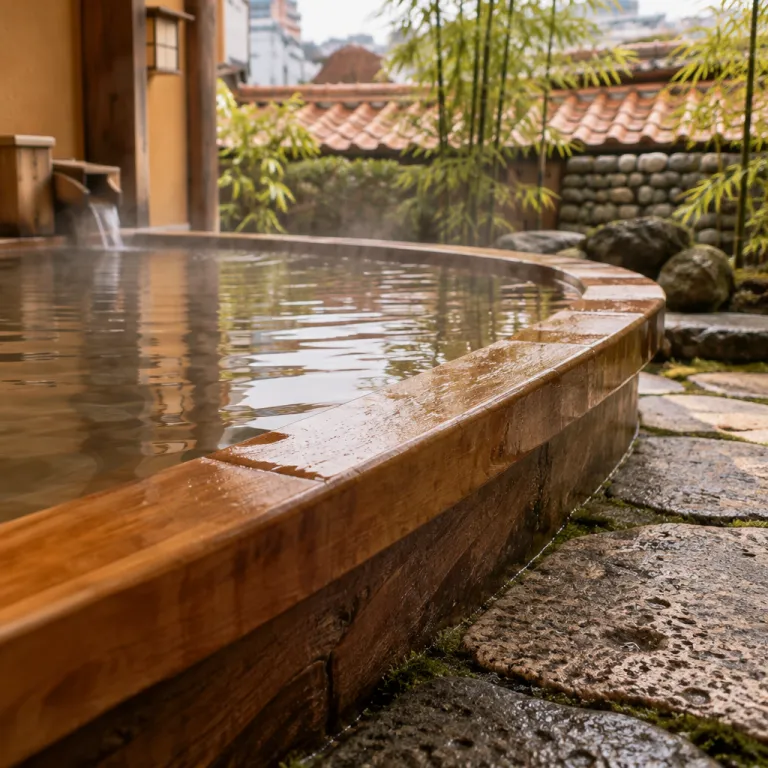
What “onsen hotel” really means in Osaka, and what it does not
In Osaka, the phrase “osaka hotel with onsen” hides a spectrum of realities. Some properties pipe in genuine hot spring water, while others offer only heated tap water in large communal baths that feel like a spa but are not true hot springs. If you care about authenticity, you must read the small print before you book any hotel with a so called onsen.
Under Japan’s Hot Springs Act (Onsen Hō), a real onsen hotel in Japan uses mineral rich hot spring water that emerges at 25°C or higher or contains a legally defined level of dissolved minerals, and many such places proudly publish their source details on signage or in-room booklets. In central Osaka, most hotels with large baths rely on filtered city water, so they are technically large public baths or “sento style” facilities only in a poetic sense, even if the marketing leans heavily on the word onsen. When you see a property in Osaka that claims a natural hot spring, look for the Japanese term gensen kakenagashi or clear mentions of hot spring or hot springs in the facility description and check whether the spring is on site or trucked in from elsewhere in Japan.
Concrete examples help. Some urban properties, such as business hotels around Sakaisuji-Hommachi or Tennoji, advertise “natural hot spring” baths that are in fact heated tap water in a large communal tub, while a smaller group of Osaka hotels draw from certified springs and list the spring name, temperature, and mineral composition in their materials. Rooms with deep soaking tubs can still feel restorative after a day around Dotonbori or Namba, but they are not a private onsen in the traditional Japanese meaning. Think of them as private open soaking spaces, ideal for shy travelers who dislike shared public baths yet still want heat and ritual. The key is to decide whether you want a convenient Osaka hotel with onsen style facilities in the city, or whether you will trade location for a true hot spring experience in a ryokan with character outside Osaka.
Onsen, sento, and spa: choosing the right kind of soak for your trip
Osaka sits in a wider Kansai network of hot springs, and the smartest travelers treat the city as a base for both food and baths. Within Osaka itself, you will mostly find large communal baths that function like upgraded sento, plus a growing list of hotels with rooftop tubs that offer a partial city view. These can be perfect after a long Osaka train ride back from Universal Studios Japan, even if the water is not from a natural hot spring.
To compare your options quickly, keep this simple contrast in mind:
- Onsen: Uses certified hot spring water that meets the Hot Springs Act criteria for temperature or mineral content; often lists the spring name and composition.
- Sento: Public bathhouse using heated tap water; may have multiple tubs and saunas but no natural spring source.
- Super sento / spa complex: Large, theme-park-style facility with many pools, jets, and saunas; usually tap water, sometimes blended with mineral additives.
For a full scale hot spring escape, many guests enjoy pairing an urban stay with a night in Arima Onsen, onsen Hyogo, or Shirahama Onsen on the Kii Peninsula, all reachable by train from Osaka. In Arima, the compact valley setting and steep lanes create a different rhythm, and a ryokan with a private onsen room or suites with private open air baths feels like a deliberate retreat from the neon of Namba. Down in Shirahama Onsen, ocean facing spring baths and outdoor pools frame the Pacific instead of billboards, and the atmosphere suits travelers who want their hotel with a horizon line rather than a skyline.
If you are unsure which style fits you, start with a clear comparison of onsen, sento, and super sento style spa complexes, using a practical guide to choosing an Osaka hotel for onsen, sento, and super sento baths that explains each format in detail. That kind of resource helps you find the right balance between an Osaka hotel with onsen style facilities and a dedicated hot spring resort night in places like Arima, Shirahama, or even around Lake Biwa near Kyoto. Once you understand the trade offs, you can decide whether to keep your base in Osaka or shift your final night to an onsen hotel outside the city.
Location trade offs: Minami convenience versus hot spring immersion
Most first timers instinctively book a hotel near Namba or Umeda, chasing easy Osaka train connections and late night ramen. That instinct makes sense if your priority is food alleys, shopping arcades, and quick hops to Kyoto or Kobe, but it rarely aligns with the most atmospheric hot springs. The deeper question is whether your ideal Osaka hotel with onsen is a central property with a polished spa, or a quieter onsen hotel that sits a train ride away from the action.
Staying in Minami, around Namba and Shinsaibashi, gives you short walks home from Dotonbori and Shinsekai, plus fast access to Osaka Castle and the business towers of Umeda. Here, you will mostly find hotels with modern wellness floors, indoor baths, and sometimes a small open air tub on the roof, which can still feel indulgent when the city lights flicker around you. In these districts, rooms with compact footprints often compensate with access to communal spring baths or large public baths, so guests enjoy a sense of ritual even without a true hot spring source.
Shift your base to onsen Hyogo or to a ryokan with hot springs in Arima, and the rhythm changes completely. You trade late night takoyaki for quiet lanes, kaiseki dinners, and private open air tubs that steam in the mountain air, with the last Osaka train back replaced by a stroll in yukata. For some travelers, that swap is the entire point of coming to Japan, and the Osaka hotel with onsen question becomes less about convenience and more about how you want your evenings to feel.
Timing your soak: how to pair Osaka days with onsen nights
The most satisfying itineraries treat the onsen as a reward, not an afterthought squeezed between check out and the airport. Long days at Universal Studios Japan, Osaka Castle Park, or the shopping corridors of Umeda and Namba leave your legs heavy, and that is when a hot bath or hot spring soak earns its keep. Plan your Osaka hotel with onsen or your onsen hotel stay to follow the most walking heavy days, not the light ones.
One strategy is to base yourself in central Osaka for the first nights, then move to Arima Onsen, Shirahama Onsen, or even a Lake Biwa shore property near Kyoto for the final stretch. After you have eaten through Dotonbori, explored Shinsekai, and taken the Osaka train up to Umeda Sky Building, shifting to a ryokan with a private onsen or rooms with private open air baths feels like a decompression chamber. Guests enjoy slow breakfasts, unhurried spring baths, and the chance to process the city’s noise from a distance, while still being within a few hours of Kansai International Airport.
If you prefer to stay put, choose an Osaka hotel with generous spa facilities and a clear list of bath types, including any open air tubs or gender separated spring baths, then schedule your park or castle days accordingly. Arrive back at the hotel with enough evening left to move through the full washing ritual, soak, and cool down, rather than sprinting through the experience. A well timed bath can reset your energy so completely that it changes how you remember the entire trip, which is why some travelers quietly value the onsen more than another shopping stop.
Etiquette, tattoos, and what “private” really buys you
For many American travelers, the anxiety around onsen etiquette and tattoos is as real as the appeal of the baths themselves. The basic rules are simple, though, and once you understand them, an Osaka hotel with onsen style facilities or a rural onsen hotel becomes far less intimidating. You wash thoroughly before entering, you soak naked, you keep voices low, and you treat the water as a shared, almost silent lounge.
Tattoos remain a grey area in Japan, and policies vary widely between hotels with communal baths, traditional Japanese ryokan with hot springs, and urban spa complexes. Some Osaka properties quietly accept small tattoos if they are covered with patches, while many Arima Onsen and Shirahama Onsen inns still post clear bans in their spring baths and large public baths, especially in older wings. If tattoos are part of your life, you will want to find a hotel with either explicit acceptance or rooms with private open air tubs, which allow you to soak without worrying about signage or stares.
Private options range from in room deep tubs that mimic a private onsen experience, to bookable family baths that you reserve by the hour, to full suites with private open air hot springs on the terrace. These formats suit couples, families, and anyone who prefers to control the temperature and the view, whether that is a city skyline in Osaka or a wooded slope in onsen Hyogo. When you weigh the cost of these upgrades against a standard room, remember that what you are really buying is not just water, but the right to move at your own pace, in your own space, after the city has taken its share of your energy.
Reading the fine print: how to evaluate onsen claims and added value
Marketing language around an Osaka hotel with onsen can be slippery, so a careful reading of the facilities list is essential. Look for clear mentions of natural hot spring sources, water temperature, and whether the baths are indoor only or include open air sections with a view. If the description leans heavily on the word spa but never states hot spring or hot springs, you are likely dealing with a wellness floor rather than a true onsen hotel.
To make that process easier, use a simple checklist when you read hotel descriptions:
- Does the hotel name a specific hot spring source and list its temperature?
- Is there any reference to the Hot Springs Act, mineral content, or gensen kakenagashi?
- Are the baths described as natural hot spring pools, or only as a spa or large public bath?
- Do photos show indoor only tubs, or also open air baths with views?
Location tools matter as much as water type when you are choosing where to stay in Osaka, Kyoto, or the wider Kansai region of Japan. A detailed guide to whether the Osaka Amazing Pass is worth it for hotel guests can help you understand how transport, attractions, and your chosen district interact, especially if you are weighing a central hotel with baths against a more remote property with stronger hot spring credentials. Once you know how often you will ride each Osaka train line, you can judge whether a nightly soak justifies extra transfers or whether a city based hotel with a good spa is the smarter compromise.
Remember that Kansai’s hot spring geography extends beyond Osaka, Arima, and Shirahama to places like Lake Biwa near Kyoto, where lakeside resorts offer their own mix of spring baths and outdoor pools. In all these destinations, guests enjoy different balances of convenience, scenery, and ritual, and the right choice depends on how you rank food, transport, and wellness. In the end, the onsen question is less about the star rating of your hotel and more about the walk home at midnight, whether that is through Namba’s neon or along a quiet path lit only by the steam rising from a private open air pool.
FAQ
How can I tell if an Osaka hotel really has a natural onsen?
Check the property’s official description for explicit references to natural hot spring water, including the source name and temperature. If it only mentions a spa, large baths, or wellness facilities without the words hot spring or hot springs, it is likely using heated tap water. When in doubt, email the hotel directly and ask whether the baths are supplied by a certified hot spring source.
Is it worth staying outside central Osaka just for an onsen?
If you value atmosphere, slow evenings, and traditional Japanese hospitality, a night in Arima Onsen, Shirahama Onsen, or onsen Hyogo can justify the extra train time. Travelers focused on nightlife, shopping, and quick hops to Kyoto may prefer a central Osaka base with good baths but no true spring. The decision comes down to whether your priority is convenience or a deeper hot spring immersion.
What should I expect from etiquette in Japanese public baths?
You will shower and wash thoroughly before entering any shared pool, then soak naked and keep your towel out of the water. Voices stay low, phones remain outside, and you avoid swimming or splashing, because the baths are for quiet soaking. Following these simple rules makes both locals and other guests more comfortable, whether you are in Osaka or a rural onsen town.
Are tattoos allowed in Osaka hotel baths and onsen?
Policies vary widely, so you must check each property’s rules before booking. Some Osaka hotels quietly accept small tattoos if they are covered, while many traditional ryokan in Arima Onsen or Shirahama Onsen still ban visible ink in communal baths. If you have extensive tattoos, look for rooms with private open air tubs or bookable family baths to avoid any issues.
Should I book a room with a private onsen or use shared baths?
Shared baths usually offer more variety, with multiple pools, different temperatures, and sometimes open air sections with a view. Rooms with a private onsen or private open air tub provide privacy and flexibility, which suits couples, families, or shy first timers. If budget allows, many travelers choose at least one night with a private facility and use shared baths on other nights.